
Small acts of service can make a meaningful difference in your community’s financial wellbeing.
Financial wellness grows when people share knowledge, resources, and judgment-free support.
MLK Day is a reminder that collective action—no matter how small—helps build stronger, more financially resilient neighborhoods.
Martin Luther King Day, honoring the legacy of Martin Luther King, is a unique opportunity to promote service and volunteer activities in your community. By participating in MLK Day service ideas, you help carry forward Dr. King’s vision of nonviolent action and community support while also fostering financial wellness for all.
Why MLK Day Is a Perfect Time to Support Financial Wellness
Every year, MLK Day is recognized as a National Day of Service, encouraging people to turn compassion into action. The third Monday in January is designated as MLK Day to honor the legacy of civil rights leader Martin Luther King Jr. Across the country, communities organize volunteer events, donation drives, and educational programs to honor Dr. King’s legacy of justice and collective care.
In a time when many communities across America are navigating ongoing conversations about equity and human dignity, MLK Day offers a moment to pause and reconnect with the shared values that bring people together. Acts of service—big or small—remind us that strengthening our neighborhoods begins with showing up for one another.
Whether you have five minutes, five dollars, or five hours, there are simple, meaningful ways to help your neighbors build financial confidence and stability.
How Financial Wellness Connects to MLK’s Legacy
Reflecting on Martin Luther King Jr.’s life and legacy, we see how his commitment to economic justice, access, and dignity continues to inspire ongoing service and financial wellness efforts. Dr. King’s vision of the ‘beloved community’ called for a society rooted in social and economic justice, where everyone is included, and compassion guides our actions. Supporting financial wellness in your community is one way to honor that vision.
You don’t need to be a financial expert or have a large budget—just a willingness to share what you know, offer encouragement, or help someone access trustworthy resources.
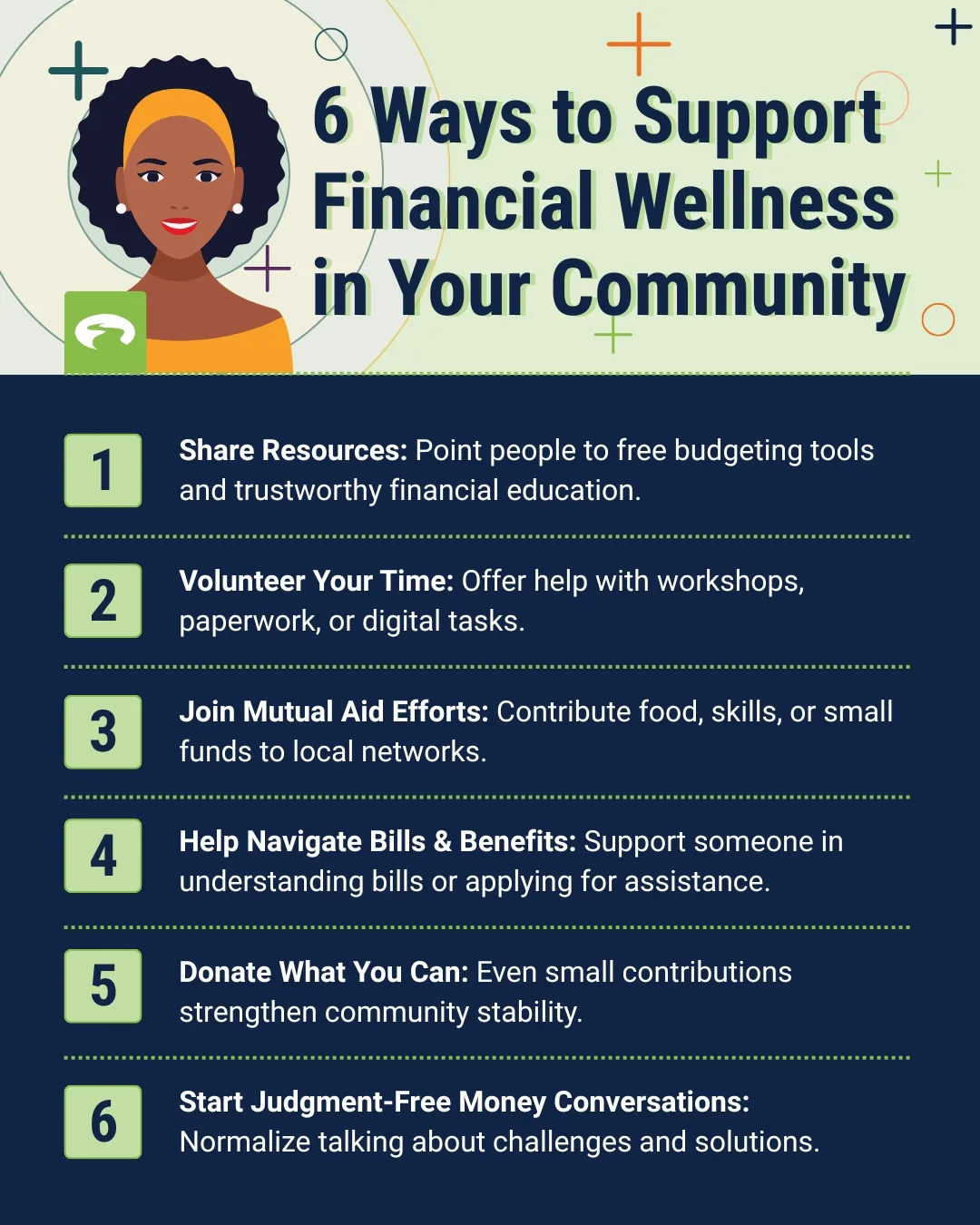
1. Share Free, Trustworthy Financial Resources
Many people want to improve their financial situation but don’t know where to start. You can help by pointing them toward free, reputable tools—especially those that avoid jargon and offer step-by-step guidance. These tools can help people track their expenses and manage their accounts.
Easy ways to do this:
- Share links to free budgeting tools: A great place to start is the CFPB’s free financial education materials as well as GreenPath’s own library of free financial tools and learning resourcesfree financial tools and learning resources.
- Post community resources on social media or neighborhood groups: A simple “Here’s a free resource that helped me” can go a long way.
- Print and share flyers at local gathering spots: Libraries, churches, and community centers often welcome resource sheets.
- Search online for free financial resources or local support programs: Use search tools to find and share relevant opportunities or information with your community.
2. Volunteer Your Time—Even an Hour Helps
MLK Day volunteer events often include activities that support community stability, such as assembling care kits or helping local nonprofits with administrative tasks. You can serve by volunteering your professional skills to nonprofits as a form of skill-based volunteering, making a meaningful impact in your community.
Ways to volunteer for financial wellness:
- Help a local nonprofit with paperwork or data entry: Many small organizations lack administrative support.
- Offer to lead a simple budgeting workshop: Keep it judgment-free and focused on basics, such as tracking spending to identify areas for improvement and better manage expenses.
- Assist seniors with online bill pay or account setup: Digital tasks can be overwhelming for some.
- Help someone with job search skills or resume building: Volunteering your time to assist others in finding a suitable job or improving their resume can make a big difference in their financial wellness.
3. Support Local Mutual Aid Efforts
Mutual aid is a community-driven way to share resources—food, transportation, childcare, or emergency funds—without red tape or judgment. Creating mutual aid networks can support community financial wellness and foster a sense of collective responsibility.
For example, maintaining or building community gardens through volunteer efforts on Martin Luther King Jr. Day is a powerful way to support mutual aid and provide fresh food to neighbors in need. These networks help people stay afloat during financial challengesstay afloat during financial challenges.
How to get involved:
- Contribute small items to community fridges or pantries.
- Volunteer at food banks, soup kitchens, or homeless shelters. This addresses food security and homelessness on Martin Luther King Jr. Day.
- Offer a skill swap—you help someone with budgeting, they help you with a household task.
- Join or start a neighborhood mutual aid group using platforms like Facebook or Nextdoor.
4. Help Someone Navigate Bills or Benefits
Paperwork can be a major barrier to financial stability. Offering to help someone understand a bill, compare service plans, or apply for benefits can make a huge difference, especially when it comes to understanding and managing expenses.
You can also help them create a plan to manage their billsmanage their bills and benefits more effectively. When reviewing a utility bill, discuss the importance of understanding how you spend money each month and how tracking these expenses can lead to better financial decisions.
Examples of helpful support:
- Review a utility bill together on a regular basis to identify unnecessary fees or charges and find ways to save money.
- Help someone apply for SNAP, Medicaid, or local assistance programs.
- Assist with comparing insurance or phone plans to reduce monthly costs.
5. Donate—Even Small Amounts Count
If you have the means, consider donating cash to organizations that support financial stability, such as housing nonprofits, credit counseling agencies, or local community funds.
Your contribution is an investment in the community’s financial health, helping to build long-term stability. You can also support financial wellness by contributing to individual retirement accounts for those in need, further promoting sustainable financial growth.
Donation ideas:
- Give $5–$10 to a local emergency fund.
- Donate gently used laptops or tablets to help people access online financial tools.
- Donate entertainment items, such as tickets or passes to local events, to community members who may not otherwise have access.
Small donations add up when many people participate. Remember to maintain a balance between your generosity and your own financial wellness.
6. Start Conversations That Reduce Financial Shame
One of the biggest barriers to financial wellness is silence. People often feel embarrassed to talk about money struggles, which can prevent them from seeking help.
Supportive conversations not only break this silence but also help individuals recognize their progress toward financial wellness, making it easier to set new goals or revisit previous ones. A compassionate conversation can be the first step toward someone’s financial breakthrough.
How to create supportive conversations:
- Share your own financial learning moments—mistakes included.
- Normalize talking about budgeting and saving in everyday conversation.
- Encourage friends or family to explore free counseling if they’re feeling stuck.
- Openly discuss salary and income to help reduce stigma and promote financial wellness.
How GreenPath Can Help
Supporting financial wellness doesn’t require expertise—just empathy, curiosity, and a willingness to show up for others. MLK Day is a powerful reminder that collective action creates lasting change, especially when it comes to financial stability.
If you or someone you know wants personalized, judgment-free support, GreenPath offers free financial counselingfree financial counseling, debt management guidancedebt management guidance, and tools to help people build and maintain long-term financial health.
Our NFCC-certified counselors meet people where they are and help them find their path to financial wellness, supporting them as they plan for the future.
GreenPath Financial Service
Debt Management Program
GreenPath is a 60-year trusted national nonprofit, learn how GreenPath’s Debt Management Program can help you pay off your debt in 3-5 years, while helping you develop sound financial literacy.