

Divorce often deepens financial stress, so planning early can protect your credit and budget.
Take control of shared and individual debts with clear communication, documentation, and realistic repayment plans.
You don’t have to navigate this alone. Free financial counselingFree financial counseling and structured repayment programs can help you rebuild.
This article is intended for general financial education. GreenPath Financial Wellness does not provide legal advice. For guidance specific to your divorce or legal situation, consider consulting a qualified attorney.
Facing divorce is emotionally exhausting. When debt and money worries enter the picture, the stress can feel constant and overwhelming. If you’re navigating a divorce, you might be asking: Who’s responsible for the debt? How do I protect my credit? And how do I afford life on my own now?
You don’t need complex financial jargon or perfect answers—just clear, practical guidance you can use. This guide breaks down simple steps to help you understand your debtunderstand your debt, protect your credit, and create a financial plan that works for your next chapter.
Why Debt Matters in Divorce
Beyond an emotional toll, divorce is a challenging situation that can also pose financial challenges for everyone involved. A 2025 survey found that 42% of couples said credit card debt played a role in their divorce, and many people saw their credit scores drop afterward.
That doesn’t mean divorce causes debt; it’s that the financial stress and transition can reveal or exacerbate money issues, often at the worst possible time. The divorce process is a critical phase where integrating financial planning and debt management can help prevent future conflicts and financial hardships.
During the divorce process, it’s important to consider not only your finances but also your emotional well-being, as emotional health is a crucial aspect of overall well-being during challenging life events. Being proactive about debt during a divorce helps you avoid future legal or financial headaches and start your post-divorce life with more confidence.
Get a Clear Picture of All Your Debts
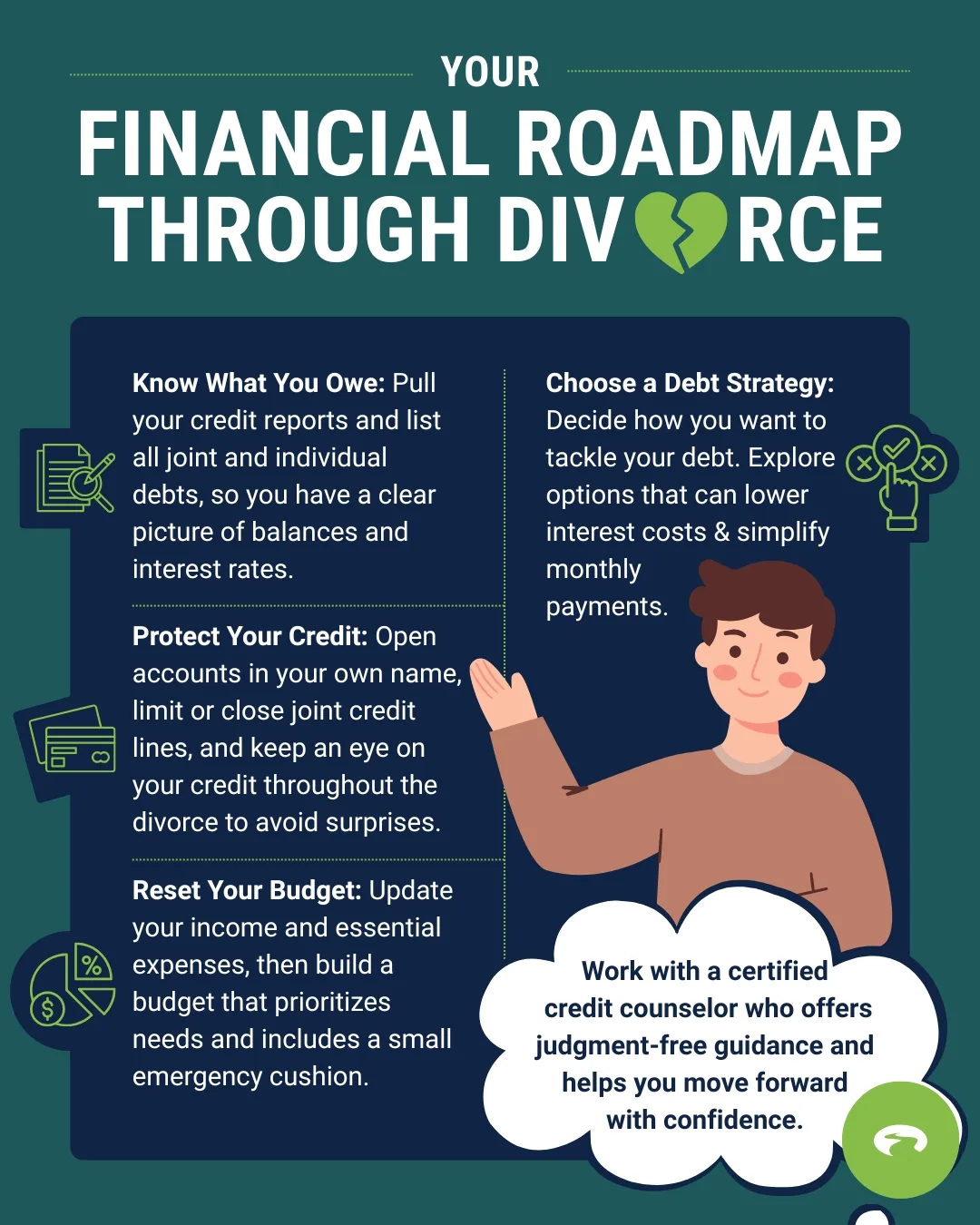
Start with the basics: list every debt tied to your name, plus joint debts with your spouse. To get a full financial picture, it’s also important to list all assets alongside your debts. This includes:
- Credit cards
- Auto loans
- Mortgages or home equity lines
- Student loans (federal and private)
- Medical bills
- Personal loans
Don’t assume you know what’s out there; sometimes debts are hidden or forgotten. Understanding the full scope of both debts and assets gives you power, not stress.
Do This
Pull free credit reports from all three bureaus through AnnualCreditReport.com—you’re entitled to one every 12 months.
Understand Your Legal and Financial Responsibility
During divorce proceedings, debt division is a critical part of the process. Debts acquired during the marriage are typically considered joint responsibilities and understanding how these are treated is essential for effective divorce financial planning.
Here’s what you need to know:
- A divorce decree is a legal agreement between you and your ex, but it doesn’t automatically update your contracts with creditors.
- If your name is on a loan or account, lenders may still hold you responsible—even if the court order says your ex should pay.
- In community property states, you and your spouse may both be responsible for debts incurred during the marriage.
In most cases, the court divides both assets and debts equally during a divorce. This matters because a missed payment on a joint account can still hurt your credit score if your name is attached. If you had a joint credit card, both you and your ex-spouse are equally responsible for the debt on that account, regardless of what the divorce decree states.
Legal costs, such as attorney fees, can also become a significant source of debt during divorce proceedings. If you and your former spouse filed taxes jointly, you will likely need to agree on a way to split any tax debt after divorce.
Do This
Contact creditors early to clarify how joint debt will be handled and whether accounts can be split, closed, or refinanced.
Separate Your Finances and Protect Your Credit
Once divorce is on the table, one of the first steps toward financial clarity is creating your own financial identity.
What to do:
- Open new bank accounts in your name only and begin transitioning your income and expenses.
- Review and manage your individual accounts, including credit cards and loans, to ensure you are responsible only for your own debts.
- Take proactive steps to separate your finances and protect your credit, especially before your ex can make changes to joint accounts or accumulate new debt.
- Close or separate joint accounts where possible and monitor your credit report for any changes.
If a debt remains in both spouses’ names, it will still appear on both credit reports and can negatively impact your ability to get approved for a mortgage in the future.
What to do:
- Open checking and savings accounts in your own name.
- Close or remove yourself from joint credit cards as soon as possible.
- Avoid new debt unless absolutely necessary.
- Monitor your credit score regularly; divorce can indirectly impact it through changes in utilization or missed payments.
Think of this as financial housekeeping: cleaning up joint accounts early helps prevent unexpected surprises later.
Build a Post-Divorce Budget
Divorce can place a heavy emotional and financial strain on a family. When one household becomes two, everyday expenses often rise sharply, and adjusting to a new financial reality can take time. Many people also face career shifts after divorce, which may affect income stability and create added pressure around budgeting or debt.
Building a new home, whether it’s furnishing a space or covering necessities, adds another layer of cost. Moving expenses can increase the burden even further, especially when one spouse remains in the marital home, and the other must start fresh.
That’s why creating a realistic postdivorce budget is one of the most empowering steps you can take. It gives you clarity, reduces stress, and helps you regain a sense of control as you rebuild your financial life.
Create a new budget by:
- Listing your net monthly income
- Tracking fixed expenses (rent, utilities, insurance, child support)
- Mapping variable costs (groceries, gas, subscriptions)
- Identifying areas where you can cut back
A clear budget isn’t meant to be punishing—it’s meant to give you confidence and direction. And setting aside even a small emergency fund (around $500–$1,000) can help you avoid high-interest debt when unexpected expenses pop up.
Tackle Debt Strategically
Once your budget is in place, choose a repayment approach that fits your situation.
Two common methods:
- Avalanche: Pay off debts with the highest interest rates first to save on interest.
- Snowball: Pay off your smallest balances first to build momentum.
Either method works—the best one is the one you stick with.
Managing debt after a divorce can feel overwhelming, but you don’t have to navigate it alone. A certified credit counselor can be a valuable resource. They can help you build a realistic budget and review your debt relief options.
If your monthly payments are becoming unmanageable, a Debt Management Program (DMP)Debt Management Program (DMP) may be worth exploring. These nonprofit programs are designed to help you secure lower interest rates and roll multiple unsecured debts—like credit cards or personal loans—into one predictable monthly payment.
Debt consolidation is another option that can simplify repayment by combining several debts into a single loan. No matter which path you choose, staying current on at least the minimum payments is essential for protecting your credit during this transition.
One more thing: debt isn’t always divided evenly in a divorce. One spouse may take on more responsibility depending on how assets are split or what a prenuptial agreement outlines. Seeking professional guidance can help you understand your obligations and create a plan that feels fair and manageable as you move forward.
Communicate (Even When It’s Hard)
Money and emotions often collide during a divorce, and conversations about finances can feel especially sensitive. When both people can communicate openly, it can make dividing debts and financial responsibilities a little less stressful for everyone involved.
Some conversations to have:
- Who will pay which bills until the divorce is final?
- Which debts will be refinanced or closed?
- What’s the timeline for removing names from accounts?
- What are the ongoing financial obligations, such as mortgage payments or shared debts, and how will they be managed with the other spouse?
- How will moving costs and any new debt incurred during the separation be shared with the other spouse?
Clarifying financial obligations with the other spouse is crucial to avoid misunderstandings and ensure long-term financial stability. Child support payments can add to debt problems for the individual trying to establish a new household. Inconsistent spousal or child support payments can also lead to financial problems and debt accumulation.
Even if communication is difficult, writing things down and sharing via email or text gives you a paper trail—useful for legal clarity.
Seek Professional Guidance (and Free Help)
Building a supportive team of professionals can make a significant difference as you navigate the financial side of divorce. Each expert plays a unique role, and having the right guidance can help you feel more confident and informed during a time that often feels overwhelming.
A financial advisor can help you understand your full financial picture, create a post divorce plan, and address areas like debt management, cash flow, and long-term stability.
If you own a home, a Certified Divorce Lending Professional (CDLP®) can help you navigate mortgage qualification challenges and coordinate with the rest of your financial team to ensure decisions support your future goals.
A tax professional is also helpful. Divorce can affect everything from filing status to deductions and credits, and having expert tax guidance can help you avoid surprises and minimize your tax burden.
Meanwhile, your divorce attorney protects your legal rights, manages negotiations, and ensures the financial agreements you make are fair and enforceable.
You Can Rebuild (With Support)
Divorce shakes your world in countless ways: emotionally, socially, and financially. But debt doesn’t have to be the thing that keeps you stuck. By taking control of your finances early, separating accounts, budgeting realistically, and seeking trusted support, you can protect your credit and regain confidence in your financial future.
If debt feels overwhelming right now, reach out for help. GreenPath’s NFCC-certified counselorsNFCC-certified counselors can help you sort out your situation and build a plan that respects your goals and budget.
Your debt doesn’t define your future—your plan does.
GreenPath Financial Service
Debt Management Program
GreenPath is a 60-year trusted national nonprofit, learn how GreenPath’s Debt Management Program can help you pay off your debt in 3-5 years, while helping you develop sound financial literacy.