
Debt consolidation can simplify repayment, but it may not improve your credit score right away. New inquiries, account age, credit utilization, and your overall credit history can all affect the timeline.
Rebuilding credit depends on steady habits over time, including paying bills on time, keeping balances manageable, limiting new applications, reviewing your credit reports, and using credit responsibly.
If consolidation payments remain difficult or you want help evaluating your options, a nonprofit credit counselor can review your finances and explain whether a debt management program or another repayment strategy may fit your goals.
So, you’ve taken the big step of consolidating your debtconsolidating your debt…kudos to you! But now what? Maybe you’re still waiting for that credit score boost you were hoping for. It’s completely normal to feel disappointed if your credit hasn’t improved as quickly as you’d like, but don’t lose hope. There are actionable steps you can take to set your credit on the right path.
Before we get into that, it’s important to understand how debt consolidation affects your credit health. If you’re still weighing your options, learn about common debt consolidation mistakescommon debt consolidation mistakes before choosing your next step.
After consolidating your debt, it may take a few months of steady payments to start seeing changes in your credit score. The timeline varies depending on your credit history and the steps you take to rebuild. Remind yourself that consistent, positive actions can gradually turn things around—even if progress feels slow at first.
How Does Debt Consolidation Impact Your Credit Score?
Debt consolidation can simplify your finances by combining multiple debts into a single payment, but its effect on your credit score isn’t always immediate. Here’s why:
- Credit Checks: When you apply for a consolidation loan, lenders often perform a hard inquiry on your credit, which can temporarily dip your score by a few points.
- New Account: Opening a new loan or credit account adds to your credit mix, which can be beneficial in the long run, but initially, it can also lower your average account age, affecting your score.
- Credit Utilization: If your consolidation involves a credit card balance transfer, maxing out that new card could spike your credit utilization ratio. Ideally, you want to keep it below 30% of your total credit limit.
Remember, debt consolidation is one step toward financial stability, not a reset button. Keep focusing on the habits that support stronger credit over time and review your credit report regularly so you can track progress and catch potential errors.
How Quickly After Paying Debt Can You Expect Your Credit Score to Improve?
You’ve been diligently making payments on your consolidated debt…but how long before your credit score catches up?
- Immediate Effects: You might see small changes within a month or two as your payments are reported to the credit bureaus. However, the extent of improvement largely depends on your credit history and the amount of debt paid off.
- Short-Term Gains: Typically, within three to six months of consistent, on-time payments, you should start noticing a more significant uptick in your score. Keep in mind, negative items like missed payments or accounts in collections take time to fade in impact.
- Long-Term Recovery: If you’ve experienced severe credit issues like bankruptcy or foreclosure, recovery could take a bit longer—often 12-24 months. Persistence is key, and every positive action you take moves you closer to your goal.
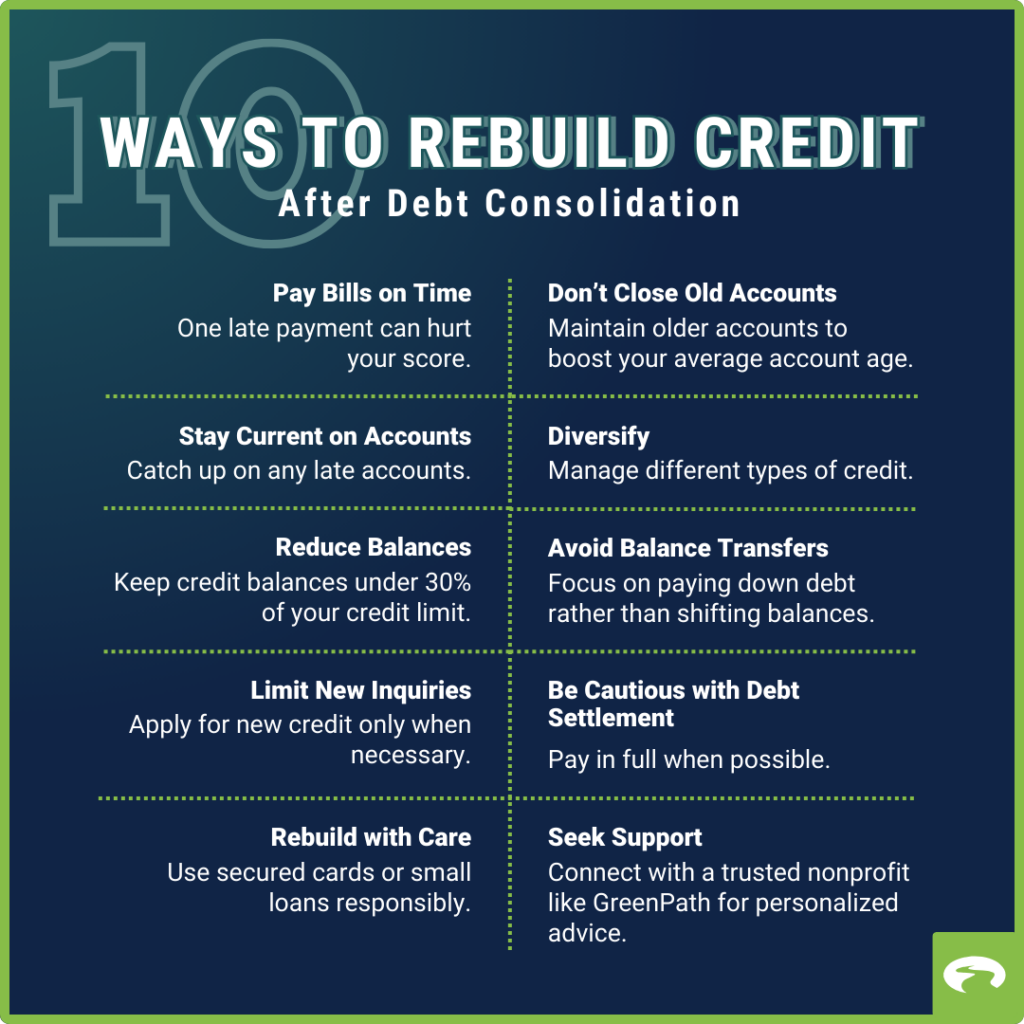
10 Ways to Rebuild Credit After Debt Consolidation
Now, let’s look at ways to rebuild your credit scorerebuild your credit score after debt consolidation. These strategies will guide you in managing your accounts wisely and setting yourself up for a healthier credit future:
- Pay Bills on Time: Your payment history is the biggest factor in your credit score. Set up automatic payments or reminders to avoid missing due dates, even on utilities.
- Stay Current on Accounts: If you’ve fallen behind, get current and stay current. The longer you keep up with timely payments, the more your score will gradually improve.
- Lower Credit Card Balances: Aim to keep your balances below 30% of your credit limits. High balances can hurt your credit utilization ratio, so pay down those cards as quickly as possible.
- Avoid New Credit Inquiries: Each new credit inquiry can ding your score slightly. Only apply for credit when necessary and avoid tempting store card offers that promise quick discounts.
- Rebuild Credit Responsibly: Consider secured credit cards or small loans that report to all three credit bureaus. Use them wisely—make small purchases and pay them off each month to build a positive payment history.
- Don’t Close Old Accounts: Length of credit history matters. Keeping older accounts open (especially those with a good payment history) can help improve your score over time.
- Mix It Up: A healthy mix of credit types, like credit cards, auto loans, or mortgages, can positively influence your score. If you only have credit cards, consider a small personal loan, but keep those payments timely.
- Avoid Balance Transfers as a Crutch: Transferring balances from card to card doesn’t tackle the root problem and can lead to higher interest rates and fees. Focus on paying down your debts instead.
- Be Cautious with Debt Settlement: Settling a debtSettling a debt for less than what you owe might feel like a win, but it can stay on your credit report as “settled” instead of “paid in full,” which can hurt your score in the long run.
- Seek Professional Help: If you’re overwhelmed, you don’t have to sort through your options alone. Connect with a trusted nonprofit credit counseling agency such as GreenPath for personalized guidance. A counselor can review your full financial picture and help you decide whether a debt management program or another repayment strategy fits your goals.
Transform your finances with GreenPath’s expert support. Take charge of your money starting now.
800-550-1961877-337-3399Debt Consolidation vs. Debt Management Program
Debt consolidation typically combines multiple debts into a new loan or credit product. A debt management programdebt management program through a nonprofit organization such as GreenPath takes a different approach: it provides a structured repayment plan, one monthly payment, potential interest-rate reductions, and personalized support.
Not sure which path makes sense for you? Start with free financial counselingfree financial counseling. A GreenPath counselor can review your income, expenses, and debts, explain your options, and help you build a realistic next-step plan without judgment or obligation.
Frequently Asked Questions
How long does it take to rebuild credit after debt consolidation?
There is no universal timeline. You may notice changes after several months of on-time payments and lower balances, but rebuilding creditrebuilding credit can take longer depending on your credit history, account activity, and any negative information on your credit report.
Does debt consolidation automatically improve your credit score?
No. Consolidation may make payments easier to manage, but your score will still depend on factors such as payment history, credit utilization, new credit inquiries, and account age. Consistent, responsible credit habits are what support improvement over time.
Should I close credit cards after consolidating debt?
Not automatically. Closing an older account can shorten your credit history or raise your credit utilization ratio. Before closing a card, consider its age, fees, available credit, and whether keeping it open could tempt you to take on new debt.
What should I do if I find an error on my credit report?
Contact the credit bureau reporting the inaccurate information and follow its dispute process. Keep copies of supporting documents and monitor your reports to confirm that any corrections are made.
What if I’m still struggling with payments after consolidating debt?
A nonprofit credit counselor can help you review your budget, debts, and repayment options. GreenPath offers free debt counseling and may recommend a debt management program if it fits your situation.
You Might Also Be Interested In…
Review Your Credit Report
When managing credit card debt, monitoring your creditmonitoring your credit can alert you to errors, protect you from fraud, and provide you with information to strengthen your credit score.
GreenPath Financial Service
Free Debt Counseling
Take control of your finances, get tailored guidance and a hassle-free budgeting experience. GreenPath offers personalized advice on how to manage your money.