
Back-to-school shopping often creates hidden costs beyond basic classroom supplies, making budget overruns a frequent challenge for parents.
Taking immediate inventory, prioritizing essential items, and utilizing alternative purchasing methods can stop overspending in its tracks.
If back-to-school expenses leave you feeling overwhelmed or reliant on high-interest debt, GreenPath offers free financial counseling and a debt management program to help you get back on solid financial ground.
You start with a reasonable plan: a backpack if last year’s zipper finally gave out, a few notebooks, maybe new shoes if the current pair is barely hanging on. Then the school emails arrive, the supply list gets longer, and suddenly there are classroom fees, activity costs, lunch account deposits, and a calculator your child needs by Friday.
That is how a back-to-school budgetback-to-school budget that looked manageable in July can feel stretched thin by August. One trip for basics turns into three, and the “just a few things” list can quickly become a much bigger expense than you expected.
If this season has you adjusting, delaying, or rethinking purchases, you are not alone. Back-to-school spending has become one of the most demanding financial moments of the year for many families, especially when everyday costs are already high.
How Much Do Families Spend on Back-to-School Shopping?
If your back-to-school spending goes over budget, it is easy to wonder if you missed something. But many families are running into the same problem: school supplies, clothing, technology, and activity costs have all become more expensive.
According to 2026 data from the National Retail Federation, families with elementary through high school students plan to spend an average of $863.86 on school-related purchases. When you multiply that across two or three children, the total cost can rival major holiday spending.
At the same time, household budgets are feeling squeezed from multiple directions. The 2026 Deloitte Back-to-School Survey found that 57% of surveyed parents expect the economy to worsen in the next six months, and 31% qualify as “hyper value-seekers.” Even so, these value seekers expect to spend about $610 per child—14% more than other parents—suggesting that deal-hunting is less about strict cutbacks and more about choosing purchases carefully.
When higher everyday costs meet last-minute school needs, even a thoughtful back-to-school budget can get knocked off track.
Why Back-to-School Expenses Multiply So Fast
Back-to-school expenses can snowball quickly. Here are a few common reasons the final total ends up higher than expected:
- Hidden fees add up: School supply lists usually cover pens, folders, and notebooks. They may not include athletic fees, art class materials, device protection plans, PTA dues, or school lunch account deposits.
- Kids outgrow things at the worst time: A child might fit into last year’s clothes in June and need new pants, shoes, or uniforms by August.
- Marketing and peer pressure are everywhere: Back-to-school season brings heavy marketing and social influencesocial influence. Students may ask for specific brand-name clothing, trendy water bottles, or popular backpacks.
- The “buy it all now” pressure is real: Retailers make it feel like every back-to-school purchase has to happen before the first day, which can create a big short-term hit to your cash flow.
What to Do When Back-to-School Costs Go Over Budget
When you realize your back-to-school spending has gone over budget, pause before making the next purchase. Panic can lead to quick decisions, like putting more on credit cards without a repayment plan or using short-term loans. These steps can help you reset before the balance gets harder to manage.
Step 1: Check What You Already Have
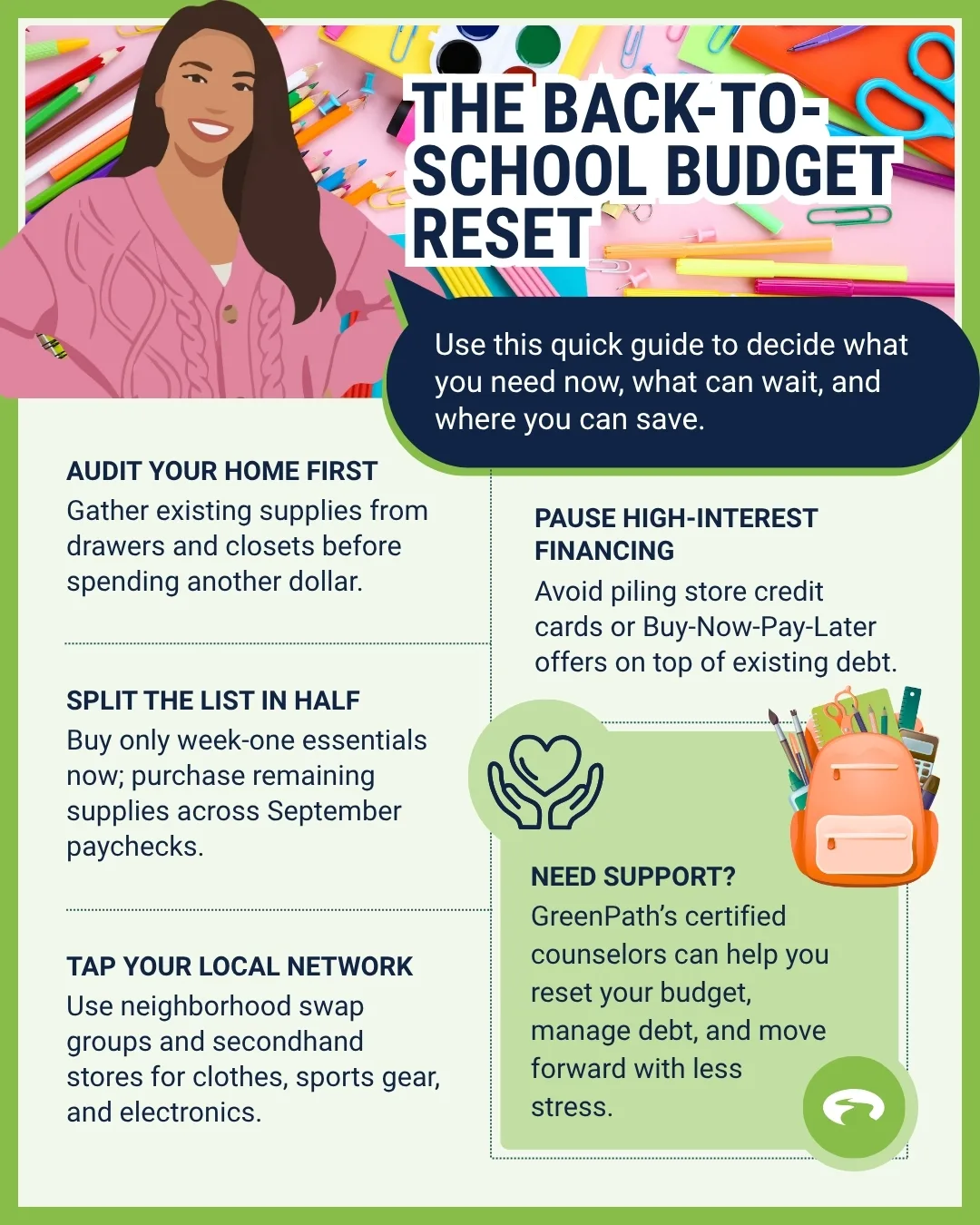
Before buying another item, gather the school supplies, backpacks, and clothing already in your home. Check closets, desk drawers, craft bins, and anything left from the previous school year.
You may find unused loose-leaf paper, binders that still work, or scissors that never made it out of the drawer. Reusing what you already own is not settling; it is a smart way to save money for the back-to-school costs you cannot avoid.
Step 2: Sort “First Week” Needs from “Later” Purchases
Many school supply lists are built for the full year, not the first day. Your child may not need three packs of disinfectant wipes, 50 glue sticks, and four boxes of pencils right away.
Divide your list into two categories:
- First-week essentials: Items needed during the first two weeks of class, such as a basic backpack, required books, core notebooks, and a few outfits that fit.
- Later purchases: Items that can wait until September or October, like winter coats, project supplies, or backup art materials.
Spreading purchases across a few paychecks can ease pressure on your bank account. It may also help you catch post-start-of-school sales on items you do not need right away.
Step 3: Try Swap Groups and Secondhand Options
Children outgrow clothing long before the fabric wears out. Community buy-nothing groups, local parent swap events, and consignment stores can be helpful places to find back-to-school clothing at a lower cost.
A clothing swap with neighbors, friends, or other parents can help you find quality items without spending more. For calculators, sports equipment, or musical instruments, check secondhand platforms before buying new.
Step 4: Talk to the School Early
If school fees, field trips, uniforms, or technology costs are creating real financial strain, contact the school principal, counselor, or front office.
Many schools have fee waivers, supply closets, community resources, or confidential aid funds for families on tight budgets. Reaching out early gives the school more time to help.
Step 5: Be Careful with Financing at Checkout
When money is tight, Buy Now, Pay Later plansBuy Now, Pay Later plans or store credit cards can look like an easy fix. But splitting several purchases into payments can make it harder to see what you owe and when each payment is due.
A missed payment can bring late fees or high interest charges, adding more stress to an already tight season. Whenever possible, stick with cash, debit, or money you have already set aside.
Rebalancing Your Household Finances for the Fall
A seasonal budget spike often calls for two moves: a short-term reset and a plan for next year. Once your immediate back-to-school expenses are under control, take a look at the rest of your fall budget.
For the next few pay periods, look for small places to free up cash. You might pause a subscription, scale back dining out, or delay a non-urgent purchase. Put those savings directly toward your back-to-school balance so seasonal spending does not turn into long-term credit card debtcredit card debt.
Then, start planning for next year. Saving $10 or $15 a week in a dedicated back-to-school fund starting in September can create a useful cushion by next August. That savings can make school supply lists feel less stressful and give you more flexibility to shop sales when they happen.
When Back-to-School Stress Points to a Bigger Debt Challenge
Sometimes, a back-to-school budget crunch is not just about notebooks and sneakers. It can also reveal that a household budget is already stretched by credit card balances, personal loans, medical bills, or other monthly obligations.
If you used credit cards to cover back-to-school expenses and are not sure how you will make the monthly payments, or if you are constantly moving money from one bill to cover another, it may be time to get professional financial guidance.
At GreenPath, certified financial counselorscertified financial counselors can help you look at your full financial picture without judgment. Together, you can create a realistic budget, prioritize payments, and explore options for managing debt. If high-interest credit card debt is making monthly payments difficult, a Debt Management Program (DMP)Debt Management Program (DMP) may help simplify repayment through one monthly payment and, in some cases, reduced interest rates or waived fees from participating creditors.
You do not have to handle financial stress alone. A free, confidential financial assessment can help you understand your options and build a clear path forward.
GreenPath Financial Service
GreenPath, A Financial Resource
If you’re interested in building healthy financial habits, paying down debt, or saving for what matters most, take a look at these free financial tools.