

Honest, age-appropriate conversations about money can help children feel more secure, even when your family is facing financial stress.
Everyday moments, from grocery shopping to adjusting family plans, can become opportunities to teach kids about money and build lifelong financial confidence.
If financial stress is making it difficult to plan ahead, GreenPath’s free financial counselingfree financial counseling can help you create a realistic path forward for your family.
Your child notices more than you think.
Maybe they’ve asked why you’re buying a different brand at the grocery store, skipping your usual Friday night takeout, or saying “not this month” when they ask for something new. Maybe they’ve overheard a conversation about bills or noticed that you seem more stressed than usualmore stressed than usual.
Children are naturally observant. Even when parents try to protect them from financial worries, kids often recognize when something has changed.
That doesn’t mean they need to know every detail of your family budget. But avoiding money conversations altogether can leave children to fill in the blanks themselves. And for many kids, uncertainty can feel more stressful than a simple, honest explanation.
Talking to kids about money during tough financial times isn’t about sharing adult problems. It’s about helping children understand what’s happening in a way that feels safe, honest, and appropriate for their age.
Those conversations can provide reassurance today while helping children develop healthy financial habits they can carry into adulthood.
Why Talking to Kids About Money Matters
Many parents hesitate to discuss money because they don’t want their children to worry. That’s an understandable instinct.
But children often sense financial stress whether it’s discussed or not. They notice changes in routines, fewer purchases, canceled plans, or tension between adults. Without context, they may make assumptions or even believe they are responsible for changes happening at home.
A calm, age-appropriate conversation can replace uncertainty with reassurance.
Recent reporting shows that rising everyday costs are making these conversations more relevant for many families. A 2026 CNBC article noted that many parents are becoming more transparent with their children about money as household budgets tighten, including explaining why certain purchases may need to wait or no longer fit the family budget.
The goal isn’t to have a perfect conversation. It’s to create opportunities for children to learn about money and feel secure.
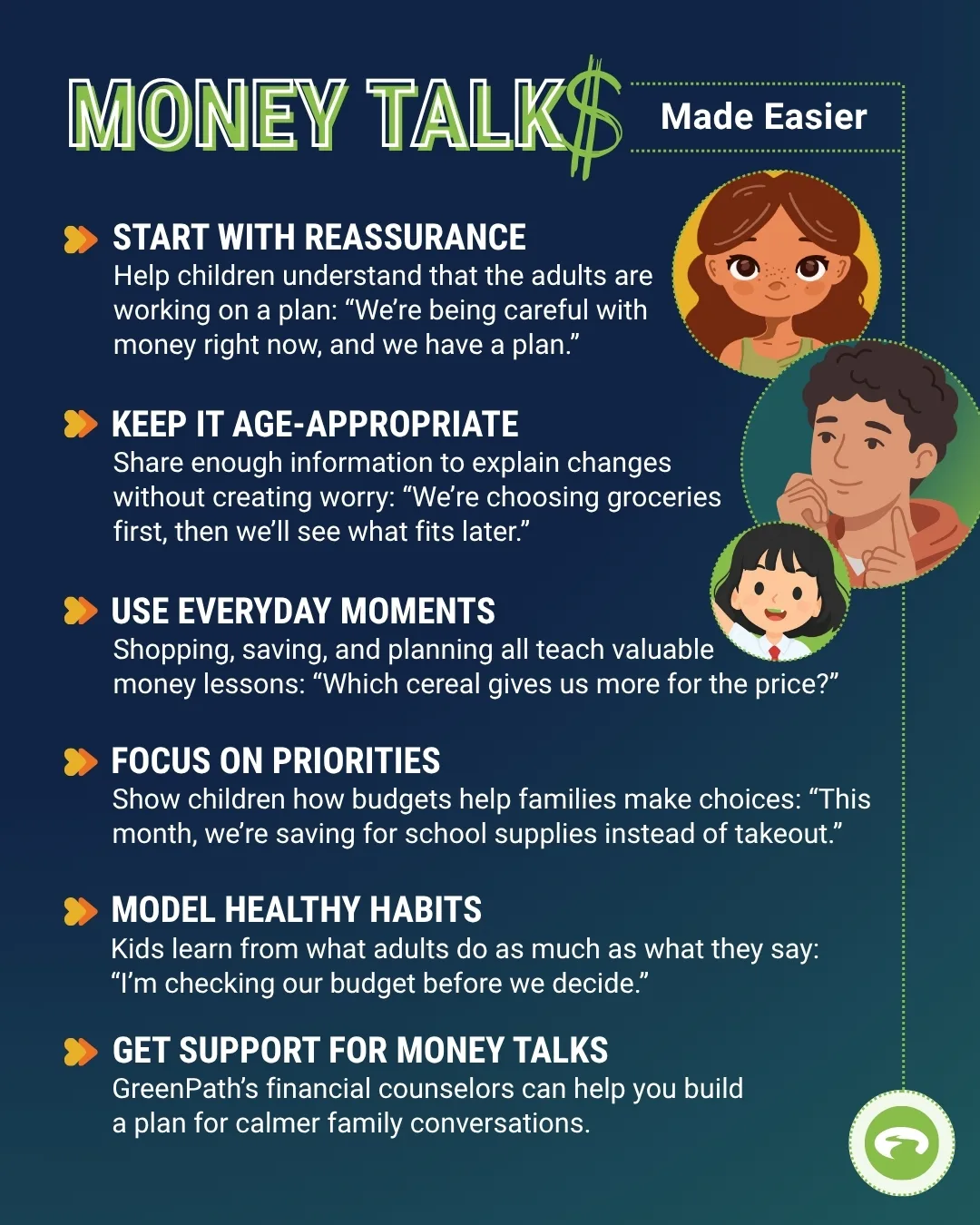
How to Talk to Kids About Money: Start with Reassurance, Not Financial Details
When money feels tight, children are often asking a bigger question:
“Are we going to be okay?”
Start there.
Children need to know that the adults in their lives are working on the situation and making thoughtful choices. Depending on your family’s circumstances, that might sound like:
“Some things cost more than they used to, so we’re being extra careful with our money right now.”
Or:
“We’re making some changes to our spending so we can focus on the things our family needs most.”
Notice what these statements do. They acknowledge reality without creating fear.
Young children don’t need to know about credit card balances, overdue bills, or every financial concern you may be carrying. What they need is reassurance that they are loved, cared for, and not responsible for solving adult problems.
Tailor Money Conversations to Your Child’s Age
Children understand money differently depending on their age and experienceage and experience.
For younger children, keep conversations simple and concrete. Preschoolers and early elementary-aged kids can begin learning that families make choices about how to spend money. Explaining that your family is choosing groceries over a new toy or a free activity over an expensive outing helps them understand that money is connected to priorities.
Elementary-aged children can begin to understand concepts like budgeting, comparing prices, and planning ahead. A grocery trip can become a lesson in finding value. A conversation about waiting to buy something can become a lesson about saving and decision-making.
Teenagers are often aware of financial issues beyond the household. They may hear about inflation, housing costs, or student debt from friends, school, or the news. Older kids may appreciate more transparency and can learn from conversations about budgeting, credit, saving, and long-term goals.
At every age, the goal is the same: share enough information to build understanding without placing financial responsibility on your child.
Teaching Kids About Money Through Everyday Life
The most meaningful financial lessons often happen during ordinary moments. Psychology Today notes that when parents are under financial pressure, children may experience changes in routine, emotional support, and the overall mood at home.
A trip to the grocery store can become an opportunity to compare prices or talk about making choices. Planning a family activity can show children how a budget helps you decide where to spend money. Saving for a goal, whether it’s a family outing, a special purchase, or a holiday tradition, helps children see that budgeting isn’t only about saying no.
It’s about making room for what matters most.
You can also invite children into small, age-appropriate decisions:
- Comparing prices while shopping
- Planning a low-cost family activity
- Setting a savings goal
- Talking about needs versus wants
These experiences help children understand that money decisions and family budgetingfamily budgeting are things families manage thoughtfully—not something to fear. They also show that managing money is an ongoing process: families plan ahead, compare prices, delay some purchases, set goals, and make intentional choices about what matters most.
Be Honest About Financial Stress Without Creating Anxiety
There is a difference between being transparent and sharing financial worries in a way that children aren’t equipped to handle.
For example, saying “We’re broke” may feel like an honest expression of stress, but a child may interpret it as meaning their home or security is at risk.
Instead, focus on language that acknowledges challenges while emphasizing problem-solving.
| Instead of saying… | Try saying… |
|---|---|
| “We’re broke.” | “We’re being careful with our money right now.” |
| “We can’t afford that.” | “That isn’t something we’re choosing to spend money on today.” |
| “Stop asking for things.” | “I know you want that. Let’s talk about where it fits with our family priorities.” |
| “Money is really bad right now.” | “Some things cost more, so we’re making a plan for what our family needs most.” |
Children learn not only from what adults say but also from how adults respond to challenges. Seeing parents approach financial decisions calmly can help children develop confidence and resilience.
Make Sure Children Don’t Feel Responsible
Many children respond to financial stress by looking for ways to help.
A child might say they don’t need a birthday gift, offer to quit an activity they enjoy, or worry about asking for something they want.
Those reactions often come from love and concern. But children should not feel responsible for solving family finances.
Thank them for caring and remind them that managing money is an adult responsibility. Their job is to continue learning, growing, and being a kid.
Free Support Is Available
Money conversations don’t have to be perfect to be meaningful. By talking openly with children, using age-appropriate explanations, and modeling thoughtful decision-making, parents can help kids build confidence and a healthier understanding of money.
The lessons children learn during challenging financial seasons can stay with them long after the immediate challenge has passed. If money stress is affecting your family, GreenPath’s certified financial counselorscertified financial counselors can help you review your budget, manage debt, and create a realistic path forward—at no cost.
GreenPath Financial Service
GreenPath, A Financial Resource
If you’re interested in building healthy financial habits, paying down debt, or saving for what matters most, take a look at these free financial tools.