
Transitioning from military service to civilian life brings major financial changes, from new housing and healthcare costs to adjusting income and managing debt.
Building a strong financial foundation after military service starts with understanding VA benefits, creating a realistic budget, protecting your credit, and planning for unexpected expenses.
If debt or rising monthly payments are creating financial stress, GreenPath can help eligible borrowers explore repayment strategies, financial counseling, and structured debt management optionsstructured debt management options.
If you or a veteran you know is in crisis, contact the Veterans Crisis Line for immediate, confidential support.
Leaving the military can throw your finances off balance, even if you have always been responsible with money. The shift is not just about earning a civilian paycheck. It is about losing systems that once made daily financial life more predictable, from housing support and healthcare to steady pay schedules and built-in structure.
That is why the transition can feel unsettling, even for veterans who are employed, organized, and doing the right things on paper. When expenses change, benefits require more hands-on management, and familiar routines disappear, financial confidence can take a hit.
Rebuilding that stability does not happen all at once. More often, it comes from a series of practical steps that help you adjust, regain control, and create a new financial routine over time.
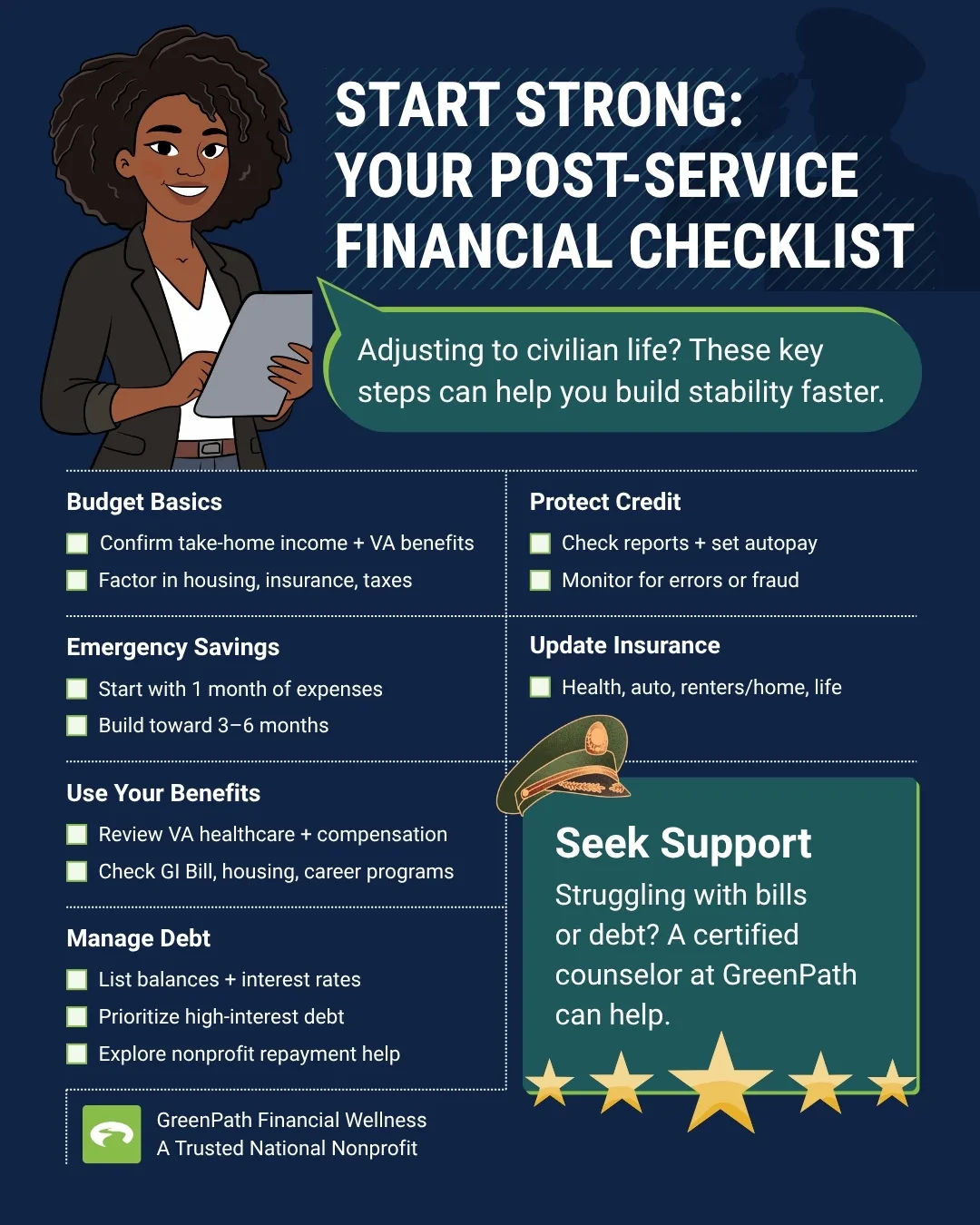
This financial checklist for veterans covers some of the most key areas to focus on after leaving the military, including budgeting, VA benefits, debt management, emergency savings, insurance, and credit protection.
How to Build a Civilian Budget After Military Service
One of the biggest financial adjustments veterans face is learning how different civilian expenses can feel compared to military life.
A civilian salary may initially appear higher on paper, but many veterans quickly discover that take-home income changes once healthcare premiums, taxes, commuting costs, retirement contributions, insurance, and housing expenses are factored in. Some expenses that were partially subsidized or simplified during military service now require independent planning and budgeting.
This is why building a civilian budgetbuilding a civilian budget is so important early in the transition process. A budget is not about restricting every purchase or eliminating flexibility. It is about creating visibility and reducing surprises.
Start by calculating your actual monthly take-home income and recurring expenses. Include:
- Employment income
- VA disability compensation
- Retirement or pension income
- GI Bill housing allowances
- Debt payments
- Savings contributions
- Housing and insurance costs
Veterans adjusting to civilian life often underestimate how quickly smaller monthly expenses add up. Streaming services, higher grocery costs, transportation expenses, and increased insurance premiums may not seem significant individually, but together they can dramatically affect cash flow.
The Consumer Financial Protection Bureau’s military and veteran financial resources offer budgeting tools and guidance specifically designed for service members, veterans, and military families.
Why Emergency Savings Matter After Military Service
Even well-planned transitions can come with financial surprises. Delayed employment, relocation costs, medical expenses, or temporary gaps in benefits can create pressure quickly if there is no financial cushion available.
That is why emergency savings are especially important during the first few years after military service. An emergency fund creates flexibility during uncertain periods and helps veterans avoid relying on high-interest credit cards or loans to cover unexpected expenses.
Many people assume they need thousands of dollars saved immediately before starting an emergency fund, but consistency matters more than perfection. Building savings gradually is still valuable. Even small automatic transfers into a separate savings account can create momentum and improve long-term financial stability.
A realistic starting goal is one month of essential expenses, followed by three to six months over time if possible. The exact number matters less than creating the habit of consistently setting money aside.
Understand Your VA Benefits and Veteran Financial Resources
Many veterans do not fully review their benefits after separation because the process feels confusing or time-consuming. Others mistakenly assume they are not eligible for programs that could significantly reduce financial pressure.
Reviewing your VA benefits early can help you better understand what financial assistance, healthcare support, education funding, and housing resources may already be available to you.
Important benefits to review may include:
- VA healthcare eligibility
- Disability compensation
- GI Bill education benefits
- VA home loan programs
- Veteran employment resources
- Vocational Rehabilitation and Employment (VR&E) programs
The Department of Veterans Affairs transition resource center provides information on benefits, eligibility, healthcare enrollment, and financial support programs for veterans transitioning to civilian life.
Using these programs does not mean you are struggling financially. These benefits were earned through military service and are designed to support long-term stability after separation.
How Veterans Can Manage Credit Card Debt After Military Service
Debt can become a serious source of stressa serious source of stress during major life transitions, especially when income changes happen faster than expenses adjust.
Some veterans rely on credit cards or personal loans to bridge financial gaps during relocation, job searches, delayed benefits processing, or unexpected emergencies. While that may solve short-term problems, high interest rates can make balances difficult to pay down over time.
This is where many people become trapped financially. Even when monthly payments are made consistently, a substantial portion of the payment may go toward interest instead of reducing the balance itself. Over time, debt can begin to feel permanent.
Creating a debt repayment strategy early is often far easier than waiting until accounts become delinquent or collections begin. Start by reviewing:
- Total balances
- Interest rates
- Monthly minimum payments
- Due dates
From there, look for opportunities to simplify repayment and reduce interest costs where possible.
For veterans struggling with high-interest credit card debt, nonprofit credit counseling organizations (such as GreenPath) may help eligible borrowers create a structured repayment plan, consolidate unsecured debt payments into one monthly payment, and potentially reduce interest rates through a Debt Management ProgramDebt Management Program.
Why Credit Protection Matters for Veterans
Your credit affects far more than loan approvals. Credit history may influence apartment applications, mortgage rates, auto insurance pricing, utility deposits, and even some employment screenings.
Major life changes can also increase the risk of missed payments, administrative mistakes, or fraud. Veterans moving between addresses or changing financial accounts may be especially vulnerable to identity theft or billing issues during the transition period.
Monitoring your credit regularly can help catch problems early before they become more expensive to fix. Review your credit reports, confirm automatic payments are functioning properly, and make sure old accounts and mailing addresses are updated correctly.
Veterans and military families are frequently targeted by scams and predatory financial products. Staying proactive about credit monitoring and financial security can help reduce long-term financial damage.
Reevaluate Insurance Coverage After Leaving the Military
Coverage that once felt automatic may now require independent research, enrollment, and budgeting. Healthcare, dental insurance, auto insurance, renters’ insurance, homeowners’ insurance, life insurance, and disability coverage should all be reviewed carefully after separation.
This is especially important for veterans supporting spouses, children, or other dependents. A single uncovered emergency or medical issue can quickly create financial strain without adequate protection in place.
Reviewing insurance policies may not feel urgent during transition, but it is one of the most important ways to protect long-term financial stability.
Use Veteran Career and Education Benefits to Increase Long-Term Financial Stability
Career transitions after military service are rarely instant. Even highly qualified veterans may need time to adapt to civilian hiring practices, translate military experience into resumes, or pursue additional certifications.
That adjustment period is normal.
Programs like the GI Bill, veteran hiring initiatives, apprenticeships, credentialing programs, and vocational rehabilitation services can help veterans build stronger long-term earning potential over time. Additional education or career training may also open opportunities for higher paying or more stable employment later.
The Military OneSource career and transition resources provide career guidance, transition planning tools, and financial resources specifically for servicemembers and veterans entering civilian life.
The Emotional Side of Financial Transition After Military Service
Financial stress after military service is not always about numbers alone.
Many veterans leave the military with strong discipline, problem-solving skills, and financial responsibility, yet still feel uncertain during the adjustment to civilian life. In many cases, that uncertainty comes from losing the structure and predictability that military systems once provided.
Civilian careers often involve less clarity around advancement, benefits, income growth, and long-term financial planning. That shift can affect confidence, spending decisions, and financial habits during the first few years after service.
It is important not to interpret financial uncertainty as personal failure. Rebuilding routines takes time.
Instead of focusing on achieving perfect financial stability immediately, focus on gradual progress:
- Building consistent routines
- Avoiding unnecessary debt
- Creating manageable financial goals
- Asking for support when needed
Long-term financial health is usually built through steady habits and practical decisions repeated consistently over time.
Know When to Seek Financial Help
Transitioning from military service to civilian life is a major financial adjustment, and financial stress also becomes harder to manage when it stays hidden for too long. Warning signs may include relying on credit cards for essentials, falling behind on monthly payments, borrowing money to cover bills, or constantly feeling anxious about money.
Many veterans delay asking for help because they feel pressure to solve financial problems on their own, but setbacks during major life changes are common.
The most important thing is to focus on building a stable financial foundation early. That may include understanding available VA benefits, creating a realistic civilian budget, protecting your credit, building emergency savings gradually, and addressing debt before it grows into a larger problem.
For veterans struggling with high-interest debt or multiple monthly payments, nonprofit financial counseling may help by:
- Building realistic budgets
- Strategizing emergency savings
- Exploring debt repayment options
Financial stability after military service is rarely built through one perfect decision. More often, it comes from consistent habits, practical planning, and knowing when to seek support along the way.
GreenPath Financial Service
GreenPath, A Financial Resource
If you’re interested in building healthy financial habits, paying down debt, or saving for what matters most, take a look at these free financial tools.