
Debt consolidation combines multiple balances into one new payment, but a lower monthly bill does not automatically mean lower overall costs; compare the interest rate, fees, repayment term, and total amount repaid.
A consolidation loan may cause a temporary credit score dip from a hard inquiry, while consistent on-time payments can help over time; missed payments or new credit card spending can deepen the problem.
Debt consolidation is not the same as a debt management program: consolidation generally requires a new loan, while a DMP offers a structured repayment plan, creditor concessions, financial education, and ongoing support through a credit counseling agency.
The good news: you’ve decided to tackle your debt. The bad news: you don’t know what to do next. Which repayment strategy is best, and what’s the fine print?
First and foremost, you are not alone—with inflation and high-interest credit card rates, most Americans are feeling the burden, too. Recent reporting also shows that more consumers are turning to debt consolidation as rising costs put added pressure on household budgets. But before you leap into action, it’s important to understand the differences between two options you might be weighing: debt consolidation and debt management programs. Let’s look at both.
What is Debt Consolidation?
Debt consolidationDebt consolidation involves rolling multiple debts into a single payment, usually with a lower interest rate. This can make managing your payments easier and potentially save you money on interest. While debt consolidation can offer temporary relief from high-interest rates and multiple bill juggling, you could fall into traps that worsen your financial situation if you don’t ask the right questions (we’ll get to that!)
How Does Debt Consolidation Affect Your Credit?
When you apply for a debt consolidation loanapply for a debt consolidation loan, lenders typically perform a hard inquiry on your credit report. This can cause a slight, temporary dip in your credit score. Once you consolidate your debts into one monthly payment, managing your payments becomes easier, reducing the likelihood of missed payments and benefiting your credit score.
On the flip side, if you don’t handle your consolidated debt responsibly, it can have adverse effects on your credit. Any missed or late payments on your consolidated loan can significantly damage your credit score and continuing to use your credit cards after consolidating could also lead to the accrual of more debt than you had originally.
Transform your finances with GreenPath’s expert support. Take charge of your money starting now.
800-550-1961877-337-3399What Are the Disadvantages of Debt Consolidation?
Fees and Costs
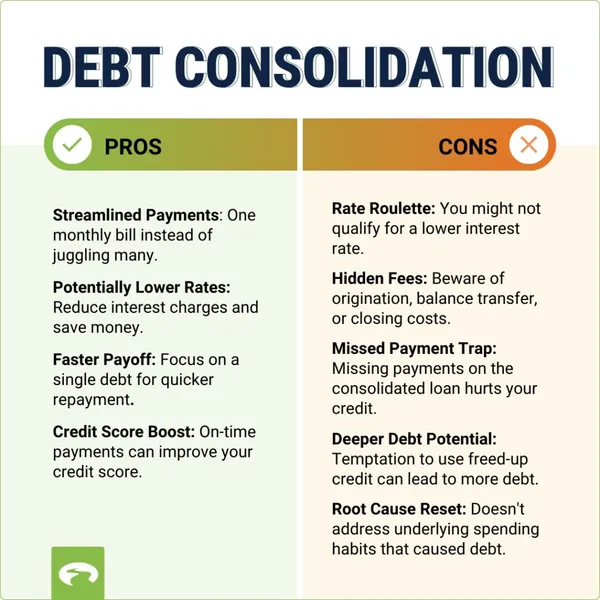
Debt consolidation loans can come with fees, including origination fees, balance transfer fees, and closing costs if you’re using a home equity loan. These fees can quickly add up and eat into any savings you might achieve through a lower interest rate. It’s crucial to factor these costs into your decision-making process.
Risk of Accumulating More Debt
One of the biggest risks with debt consolidation? The temptation to accumulate more debt. After consolidating, you might feel the freedom of financial breathing room and celebrate with more spending. This is especially risky if you consolidate credit card debt and then start using those cards again, potentially ending up in a worse financial situation than before.
Is Debt Consolidation a Good Way to Get Out of Debt?
Debt consolidation can be useful for some, but it’s not a one-size-fits-all solution. For it to be effective, you need to address the underlying habits that led to debt in the first place. Simply put, consolidation can be a quick fix rather than a long-term solution.
How Long Does It Take to Improve My Credit Score After Debt Consolidation?
The timeline for improving your credit score after debt consolidation varies based on several factors, including how well you manage your consolidated debt and your overall financial health. Typically, you may start to see improvements within a few months if you consistently make on-time payments and avoid taking on additional debt.
Can You Pay Off Debt Consolidation Early?
Most debt consolidation loans allow for early repayment without penalties. Paying off your consolidated debt early can save you money on interest and help you become debt-free faster. However, it’s important to check with your lender to understand the terms and conditions before making extra payments.
Questions to Ask Lenders
Before opting for debt consolidation, there are several factors to consider—have these questions ready when talking with prospective lenders so you walk away feeling financially informed.
- What is the interest rate on the consolidation loan?
- Are there any fees associated with the loan?
- What is the repayment term?
- How will this loan affect my credit score?
- Are there any penalties for early repayment?
Debt Consolidation vs. Debt Management Programs
Whereas debt consolidation involves combining multiple debts into a single loan with one monthly payment, often at a lower interest rate, debt management programs (DMPs)debt management programs (DMPs) offer a holistic approach to tackling debt.
A DMP, facilitated by a reputable credit counseling agency, helps you create a structured plan to pay off your debts, typically within three to five years. The agency works with creditors to arrange lower interest rates and waive fees, making your monthly payments more manageable without the need for a new loan. This approach also includes financial educationfinancial education and budgeting support, empowering you to develop healthier financial habits.
Opting for debt management over debt consolidation can provide a more sustainable solution to your financial challenges. With a DMP, you receive ongoing guidance and support, helping you address the root causes of debt and staying on track to avoid future debt issues.
Take the Next Step With a Clearer Debt Plan
You do not have to choose a repayment strategy on your own. Connect with GreenPath for free financial counselingfree financial counseling and talk one-on-one with a certified financial counselor who will review your income, expenses, and debts without judgment. You’ll leave with a clearer picture of whether debt consolidation, a debt management programdebt management program, or another option fits your situation.
Frequently Asked Questions
Is debt consolidation the same as a debt management program?
No. Debt consolidation typically combines several debts into a new loan or credit product with one monthly payment. A DMP creates a structured repayment plan through a credit counseling agency and does not require you to take out a new loan.
Does debt consolidation reduce what I owe?
Usually not. Consolidation may lower your interest rate or make payments easier to manage, but you generally remain responsible for the full balance. Review fees and the total repayment cost before deciding whether it will save you money.
What credit score do I need for a consolidation loan?
Requirements vary by lender, and there is no single score that guarantees approval. A stronger credit scorestronger credit score may help you qualify for a lower interest rate, while a lower score may lead to higher costs or fewer options.
Which debts can I consolidate?
Credit card balances, medical bills, personal loans, and other unsecured debts may be eligiblemay be eligible. Mortgages, auto loans, federal student loans, tax debt, and other secured or government debts often require different repayment options.
What should I review before consolidating debt?
Compare the interest rate, fees, repayment term, monthly payment, and total amount you will repay. Make sure the payment fits your budget, and consider whether you can avoid adding new debt after consolidation.
GreenPath Financial Service
Free Debt Counseling
Take control of your finances, get tailored guidance and a hassle-free budgeting experience. GreenPath offers personalized advice on how to manage your money.