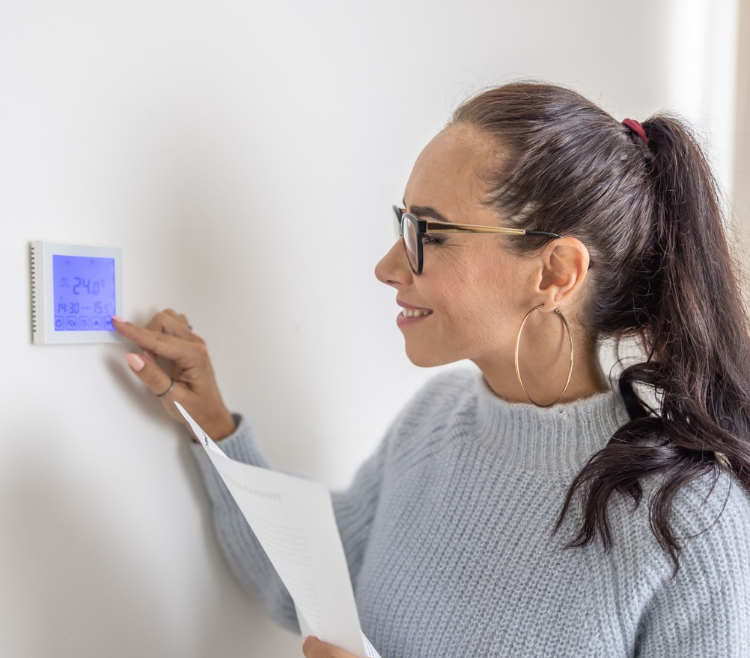
Heating and cooling make up a big share of household energy use, so thermostat settings, equipment upkeep, and air leaks are good places to start looking for savings.
Small changes, like adjusting your thermostat, sealing drafts, and using appliances more efficiently, can help lower energy costs without requiring major home improvements.
If high utility bills are squeezing the rest of your budget, GreenPath can help you build a budget, explore assistance options, and plan for changing costs.
A surprisingly high energy bill can wreck a month’s budget. Maybe the heat ran nonstop through a cold snap, the air conditioner worked overtime, or your costs crept up even though nothing about your routine changed.
You can’t control everything that goes into your energy bill, but you probably have more say over it than you think. Adjusting your thermostat, sealing drafts, and using appliances more efficiently can cut energy use without making your home uncomfortable.
This guide covers where your home likely uses the most energy, which changes are worth your time, and where to turn for help if utility costs are getting hard to manage.
What Uses the Most Energy in Your Home?
Before you change anything, it helps to know where your energy dollars go.
According to ENERGY STAR, the federal energy efficiency program run by the Environmental Protection Agency and the Department of Energy, nearly half of the energy used in your home goes to heating and cooling. Water heating, lighting, appliances, and electronics also add to your monthly costs.
So it’s more effective to focus on the biggest energy users than to try to change dozens of small habits.
Several factors shape how much energy your home uses:
- Home size and age: Larger homes usually take more energy to heat and cool, and older homes may have less insulation or more air leaks.
- Weather and seasons: Very hot or very cold temperatures mean more energy to keep your home comfortable.
- Heating and cooling systems: Older or poorly maintained equipment can use more energy than it should.
- Household size and routines: More people usually means more hot water, laundry, cooking, and electricity.
- Utility rates: Your provider’s pricing, including peak-hour rates, can change what you pay even when your usage stays about the same.
Knowing what drives your usage makes it easier to pick the changes that will help most.
8 Simple Ways to Lower Your Energy Bill
You don’t need to replace appliances or pay for big upgrades to start saving. Many of the best fixes are everyday habits or spots where your home leaks heated or cooled air.
1. Adjust Your Thermostat
Heating and cooling are often the biggest part of a monthly utility bill. One of the easiest ways to bring those costs down is to adjust your thermostat while you’re asleep or out of the house.
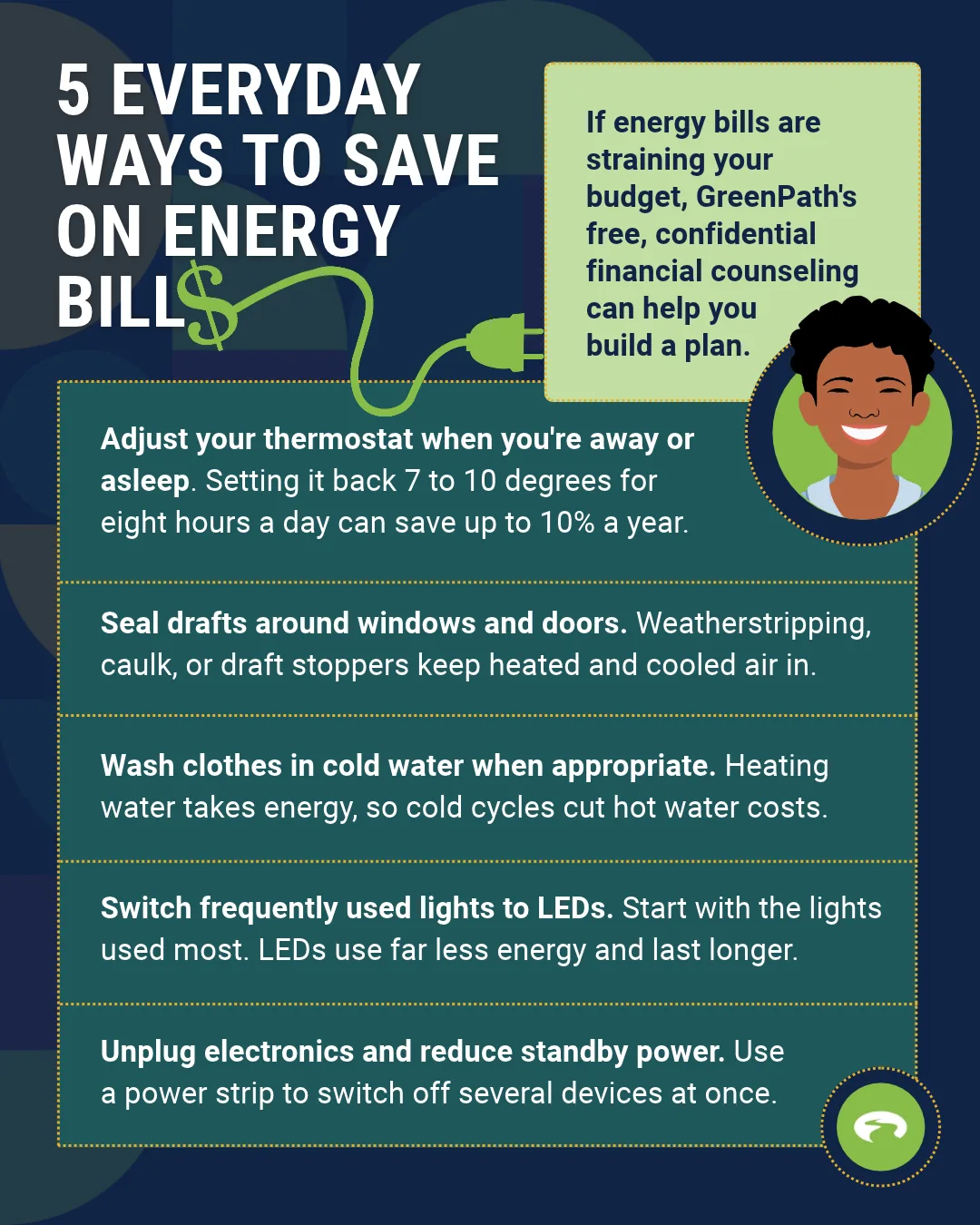
The Department of Energy estimates you can save as much as 10% a year on heating and cooling by setting your thermostat back 7 to 10 degrees Fahrenheit for at least eight hours a day. In warmer months, raising the temperature while you’re away can cut air-conditioning costs.
A few ways to make it easier:
- Use a programmable thermostat to adjust temperatures automatically based on your schedule.
- Turn the heat down a little at night and add an extra blanket if you need one.
- Raise the air-conditioning temperature when no one is home.
- Skip large, unnecessary temperature swings during the day.
If you have a heat pump, check the manufacturer’s recommendations before making big thermostat setbacks. Some systems run more efficiently with smaller adjustments.
2. Seal Drafts Around Windows and Doors
If your heat seems to run constantly but some rooms still feel cold, air leaks may be to blame.
Small gaps around windows, exterior doors, and other openings let heated or cooled air escape, so your system has to work harder to keep the house comfortable.
Check for drafts around window frames, doorways, and baseboards. Depending on where the gaps are and how big they are, inexpensive weatherstripping, caulk, or window insulation film may help.
Renters can try removable weatherstripping or draft stoppers, which don’t require permanent changes.
Small, hidden leaks are hard to find on your own, so for bigger air leaks, ask your landlord or a qualified professional about repairs. The Department of Energy’s consumer guide to air sealing shows common places leaks hide and explains when it makes sense to bring in a pro.
3. Keep Your Heating and Cooling System Maintained
A heating or cooling system that isn’t well maintained may have to work harder to keep your home comfortable.
A few routine tasks can help:
- Check your HVAC filter regularly and clean or replace it following the manufacturer’s instructions.
- Keep vents and registers clear of furniture, rugs, and other obstructions.
- Keep outdoor heating and cooling equipment free of leaves and debris.
- Schedule professional maintenance as recommended for your system.
If you rent, ask your landlord or property manager who is responsible for HVAC maintenance and filter replacements.
Regular maintenance won’t fix every efficiency problem, but it helps your equipment run the way it should and can catch issues before they turn into costly repairs.
4. Use Less Hot Water
Heating water takes energy, and everyday tasks like showering, washing dishes, and doing laundry add to your utility costs.
You don’t have to give up hot water to make a difference. Try a few adjustments:
- Take shorter showers when you can.
- Wash clothes in cold water when the load allows.
- Run dishwashers and washing machines only with full loads.
- Fix dripping hot-water faucets.
- Consider low-flow showerheads or faucet aerators.
The Department of Energy also recommends turning your water heater down to the warm setting, 120 degrees Fahrenheit, to save energy and avoid scalding. Check the manufacturer’s guidance and your household’s health and safety needs before changing the setting.
5. Switch to Energy-Efficient Lighting
If you still have incandescent bulbs in rooms you use a lot, switching to LEDs can lower your electricity use.
LEDs use far less energy than traditional incandescent bulbs and usually last longer, so you’ll replace them less often, too.
You don’t have to swap every bulb at once. Start with the lights that stay on the longest, like kitchen fixtures, living room lamps, and outdoor lights you use often.
Simple habits help, too: turn off lights when you leave a room and use natural daylight when you can.
6. Reduce Energy Use from Appliances and Electronics
Many appliances and electronics keep drawing power while they’re plugged in, even when you’re not using them. This is often called standby power.
How much it adds up depends on the device, but it can noticeably add to your electricity use.
Try these changes:
- Unplug chargers and small electronics when you’re not using them.
- Use a power strip to switch off several devices at once.
- Turn off computers, monitors, and TVs when you’re done.
- Run your dishwasher and laundry machines with full loads.
- Use smaller appliances, like a microwave or toaster oven, when they suit the meal.
If you’re thinking about replacing an older appliance, look for the ENERGY STAR label to compare efficient models. A new appliance costs money up front, so weigh the long-term savings against the purchase price.
7. Make Small Seasonal Adjustments
Your energy-saving habits may need to change with the seasons.
In colder months, open curtains on sunny windows during the day so the sun can help warm your home, then close them at night to keep heat in.
In warmer months, close blinds or curtains during the hottest part of the day to block direct sunlight. Ceiling fans can also help you feel cooler without lowering the thermostat as much.
Turn fans off when you leave the room. Fans cool people, not empty spaces.
These small adjustments take some strain off your heating and cooling system without changing your daily routine much.
8. Schedule a Home Energy Assessment
If you’ve tried several energy-saving habits and your bills are still high, a home energy assessment can help you figure out why.
An energy assessment, sometimes called an energy audit, looks at how your home uses energy and where you could make it more efficient.
Depending on what the assessment finds, recommendations may include:
- Adding insulation to attics, walls, or floors.
- Sealing air leaks.
- Improving ductwork.
- Upgrading inefficient heating or cooling equipment.
- Replacing older appliances with more efficient models.
Ask your utility provider whether it offers free or discounted home energy assessments. Your state energy office may also have programs.
The Department of Energy’s consumer guide to home energy assessments explains how to do a basic check yourself, what a professional assessment involves, and how to prepare for one.
How Can Renters Save on Energy Bills?
You don’t need to own your home to cut your energy use. Renters can take plenty of steps to lower utility costs, even without making permanent changes.
Start with what you can control:
- Use curtains or blinds to help regulate indoor temperatures.
- Seal small drafts with removable weatherstripping or draft stoppers.
- Use LED bulbs in the fixtures you use most.
- Wash clothes in cold water when appropriate.
- Unplug electronics and use power strips to cut standby power.
- Adjust your thermostat when you’re away, if you control the heating and cooling.
If your apartment has drafty windows, poor insulation, or an inefficient heating system, talk to your landlord or property manager. Ask whether repairs or upgrades could reduce energy use.
Check your lease, too, so you know which utilities you pay for. If heat or electricity is included in your rent, some energy-saving changes won’t lower your monthly housing costs.
What to Do When Your Energy Bill Is Still Too High
Even after you’ve made changes around the house, your energy bill may still be more than your budget can handle. When that happens, using less energy is only part of the answer. You’ll also want to look at payment options and available assistance.
Here are a few steps to consider.
Contact Your Utility Provider
If you’re struggling to pay an energy bill, contact your utility provider before you miss a payment. Many companies have programs for customers with high or unexpected bills.
Ask about:
- Budget billing: Some providers average your energy costs over the year so your monthly payments are more predictable. It usually doesn’t lower what you owe overall, but it can make budgeting easier.
- Payment arrangements: You may be able to spread an outstanding balance over several payments.
- Financial assistance: Some providers offer hardship programs, discounts, or emergency help for eligible households.
- Energy-saving programs: Ask about free energy assessments, rebates, or weatherization services.
If you get a shutoff notice, call your provider right away. Ask about the deadline, any protections available to you, and what you can do to avoid disconnection.
Look Into Energy Assistance Programs
If your household income is limited, you may qualify for help with heating, cooling, or other energy expenses.
One option is the Low Income Home Energy Assistance Program (LIHEAP), a federally funded program that helps eligible households pay energy bills and handle energy-related emergencies. Depending on where you live and whether you qualify, it may also help with weatherization or heating and cooling system repairs.
Eligibility requirements, application periods, and benefits vary by state.
Visit USA.gov’s guide to energy bill assistance to find your state’s LIHEAP office and learn how to apply.
You can also look into the Department of Energy’s Weatherization Assistance Program, which helps eligible households make their homes more energy efficient.
Review Your Household Budget
When energy costs go up, other expenses can get harder to cover. Taking a closer look at your monthly budget can show you where your money is going and which adjustments could make high utility bills easier to handle.
Start by reviewing your recent utility bills and figuring out your average monthly energy cost. If your bills swing a lot during the year, look at a full 12 months instead of relying on one unusually high or low month.
Then ask yourself:
- Which expenses are essential and mostly fixed?
- Which expenses change from month to month?
- Are there subscriptions or discretionary purchases you could temporarily cut back?
- Could you set aside a little during lower-cost months to prepare for seasonal increases?
The goal isn’t to cut every nonessential expense. It’s to understand what’s coming in, what you need to cover, and where you have room to adjust.
Keep Exploring
Check out these related GreenPath resources for more guidance:
- Utility Bill Payment Help: A National Guide (2026):Utility Bill Payment Help: A National Guide (2026): Explore assistance programs, payment options, and resources that can help make household energy costs more manageable.
- Budgeting Worksheet:Budgeting Worksheet: Lay out your income and expenses to see how utility costs fit into your monthly spending.
- Dollars and Sense: A Blueprint for Prioritizing Bills:Dollars and Sense: A Blueprint for Prioritizing Bills: Learn which bills to cover first when money is tight, from food and housing to utilities and debt payments.
How GreenPath Can Help You Manage Rising Household Costs
High energy bills can make it harder to keep up with your other financial responsibilities, especially when costs jump unexpectedly. Changing household habits can help, but sometimes the bigger challenge is finding room in your budget to cover everything.
GreenPath Financial Wellness offers free, confidential financial counseling. In a session, a counselor goes through your income and monthly expenses with you and talks through next steps that fit your situation.
You don’t have to wait until you’re behind on bills to reach out. Talking with a counselor early, while you still have choices, can make it easier to plan for seasonal spikes in energy costs.
Make Room for the Expenses That Matter
Don’t let a high utility bill crowd out everything else. Start with a free, confidential conversation.